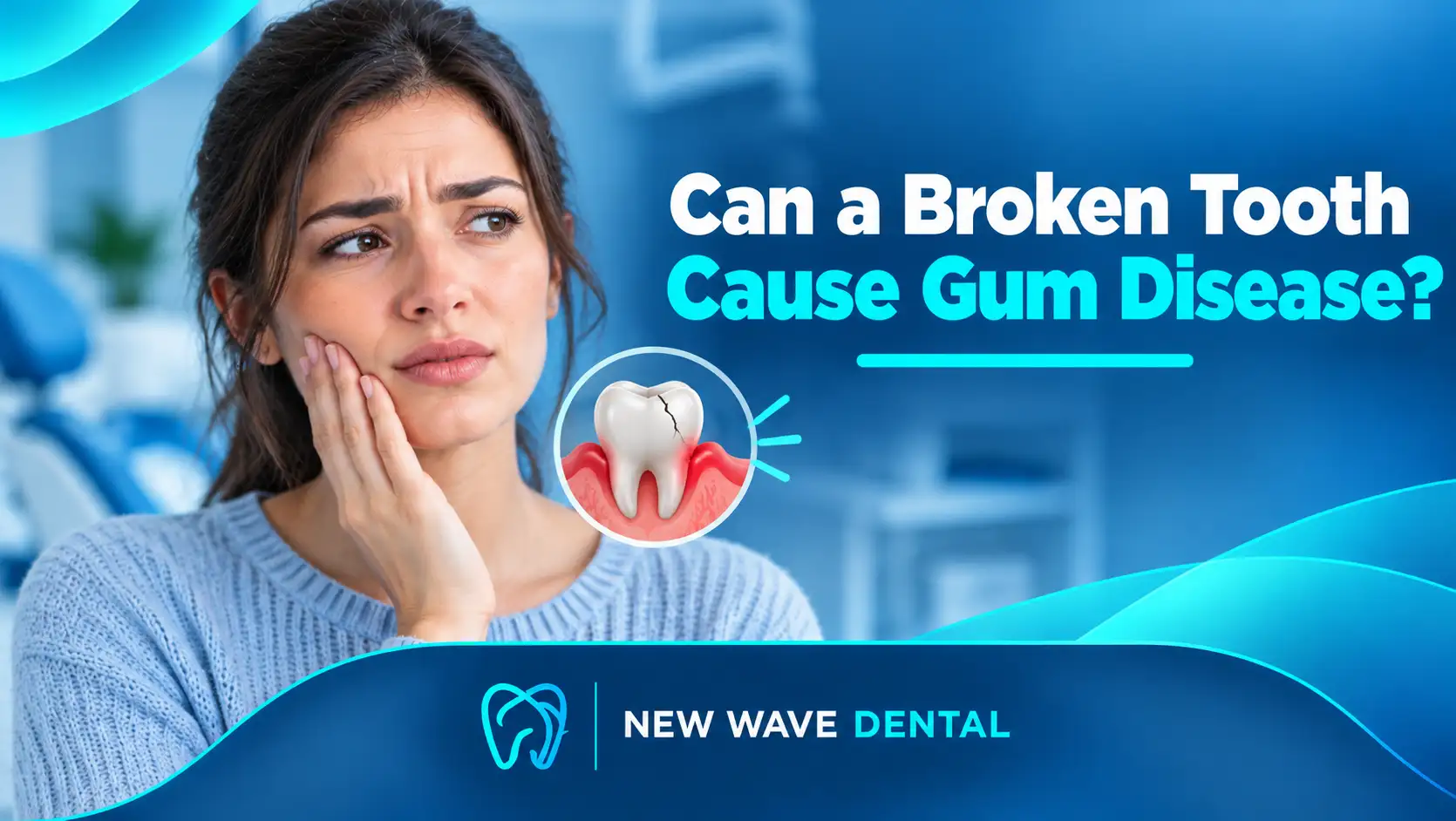
A broken tooth can do more than cause pain or sensitivity. When a tooth cracks or breaks, it can create small spaces where food particles and bacteria collect, making it harder to keep the area clean. Over time, this can irritate the surrounding gums and increase the risk of gum problems.
So, can a broken tooth cause gum disease? Yes, a broken tooth can contribute to gum disease by creating an environment where plaque and bacteria can build up around the tooth. However, a broken tooth does not automatically mean you will develop gum disease. Good oral hygiene and prompt dental treatment can help prevent complications.
Yes, a broken tooth can increase your risk of gum disease, especially if the damaged area makes brushing and flossing difficult.
When a tooth breaks, its shape and surface change. A crack, chipped edge, or missing piece can create areas where plaque and food become trapped. If these areas are not cleaned properly, bacteria can irritate the nearby gum tissue.
At first, you may notice redness, swelling, tenderness, or bleeding when brushing or flossing. If the problem continues without treatment, the inflammation can become more serious and affect the tissues supporting the tooth.
It is also important to remember that gum disease is primarily caused by plaque buildup. A broken tooth can make plaque control more difficult, but it is not the only cause.
A broken tooth can affect your gums in several ways.
A healthy tooth has relatively smooth surfaces that are easier to brush and floss. A broken or cracked tooth may have rough edges, gaps, or irregular surfaces that are harder to clean.
This can allow plaque to remain around the tooth and along the gumline.
A broken tooth may leave a space where food gets stuck. If you cannot easily remove it, bacteria can feed on the particles and multiply around the area.
This can lead to gum irritation and inflammation.
Plaque contains bacteria that can irritate the gums. When plaque is not removed regularly, it can harden into tartar, which cannot be removed effectively with normal brushing at home.
A sharp or rough broken tooth can repeatedly rub against the nearby gum. This physical irritation, combined with plaque and bacteria, can make the area sore and inflamed.
The connection between a broken tooth and gum disease is mainly related to plaque buildup and difficulty maintaining proper oral hygiene.
For example, imagine a tooth breaks near the gumline. The damaged area may become difficult to brush around, and food can repeatedly get caught there. Over time, bacteria and plaque can build up, causing the nearby gums to become inflamed.
This early stage of gum disease is called gingivitis. Common symptoms include red, swollen, or bleeding gums.
If gingivitis is left untreated, it can progress to periodontitis, a more advanced form of gum disease that can damage the tissues and bone supporting the teeth.
A broken tooth does not directly cause periodontitis, but it can make the conditions that contribute to gum disease harder to control.
When food repeatedly gets trapped around a broken tooth, it can be difficult to keep the area completely clean.
Bacteria in dental plaque can irritate the gums, causing inflammation. You may notice:
If plaque remains on the tooth for too long, it can harden into tartar. This creates an even more challenging environment for keeping the gums healthy.
That's why cleaning the area and having the broken tooth evaluated by a dentist are important, even if the tooth is not causing severe pain.
If you have a broken tooth, pay attention to changes in the nearby gums.
Inflamed gums around the broken tooth may look red, puffy, or swollen compared with the surrounding tissue.
If the gum around the damaged tooth bleeds when you brush or floss, it may be a sign of inflammation.
The area may feel sore when you touch it, brush around it, or eat.
Bacteria and trapped food around a damaged tooth can contribute to an unpleasant smell or taste.
In some cases, ongoing gum inflammation can contribute to the gums pulling away from the tooth, making the tooth appear longer.
Pus, facial swelling, or severe pain can indicate an infection and should be evaluated by a dentist promptly.
Ignoring a broken tooth may allow the underlying problem to become more complicated.
A small chip may remain relatively stable, but a deeper crack can worsen over time. Meanwhile, difficulty cleaning around the damaged area can allow plaque and bacteria to continue irritating the gums.
Depending on the type and severity of the damage, untreated problems may lead to:
The longer you wait, the more difficult it may become to restore the tooth.
The right treatment depends on how badly the tooth is damaged and the condition of the surrounding gums.
A dentist can examine the broken tooth and determine whether you need a filling, bonding, crown, root canal treatment, extraction, or another treatment. If the tooth is causing severe pain, swelling, bleeding, or other urgent symptoms, emergency dentistry may be necessary.
Continue brushing twice a day with a soft-bristled toothbrush. Be gentle around the damaged tooth and avoid aggressively brushing the gum.
Floss or use an appropriate interdental cleaner to remove food and plaque around the tooth. If floss catches or causes significant pain, ask your dentist for advice rather than forcing it.
Hard, sticky, or crunchy foods can put additional pressure on the damaged tooth and potentially make the fracture worse.
If your gums are swollen or bleeding, don't simply wait for the symptoms to disappear. Your dentist can check whether plaque, tartar, infection, or the broken tooth itself is contributing to the problem.
Regular dental checkups can help identify both tooth damage and gum disease before they become more serious.
So, can a broken tooth cause gum disease? A broken tooth does not directly cause gum disease, but it can make it easier for plaque, bacteria, and food to collect around the tooth. This can irritate the gums and increase the risk of gingivitis and other gum problems.
If you have a broken tooth and notice swelling, bleeding, persistent bad breath, pain, or an unpleasant taste, it is best to have it checked by a dentist. Treating the damaged tooth and keeping the surrounding area clean can help protect both your tooth and your gums.
Yes. A broken tooth can contribute to swollen gums if food and plaque become trapped around the damaged area. However, swelling can also be caused by an infection, so persistent or severe swelling should be checked by a dentist.
It can. A broken tooth may make it harder to clean around the gumline, allowing plaque to build up and irritate the gums. Bleeding during brushing or flossing can be a sign of gum inflammation.
A broken tooth can increase the risk of infection, particularly if the damage allows bacteria to reach deeper parts of the tooth or surrounding tissues. Significant swelling, pus, severe pain, or fever requires prompt dental evaluation.
Gum disease and a broken tooth can affect each other indirectly. Inflamed or damaged supporting tissues may make it harder to maintain the tooth, while a broken tooth can make plaque control more difficult.
Yes. A broken tooth does not always cause immediate pain. Even if you feel fine, the damage may worsen or create areas where plaque and food collect. A dental examination can identify the problem and help prevent complications.
Keep the area clean with gentle brushing and careful cleaning between the teeth, avoid chewing hard foods on the damaged tooth, and arrange a dental appointment to have the tooth evaluated and treated.