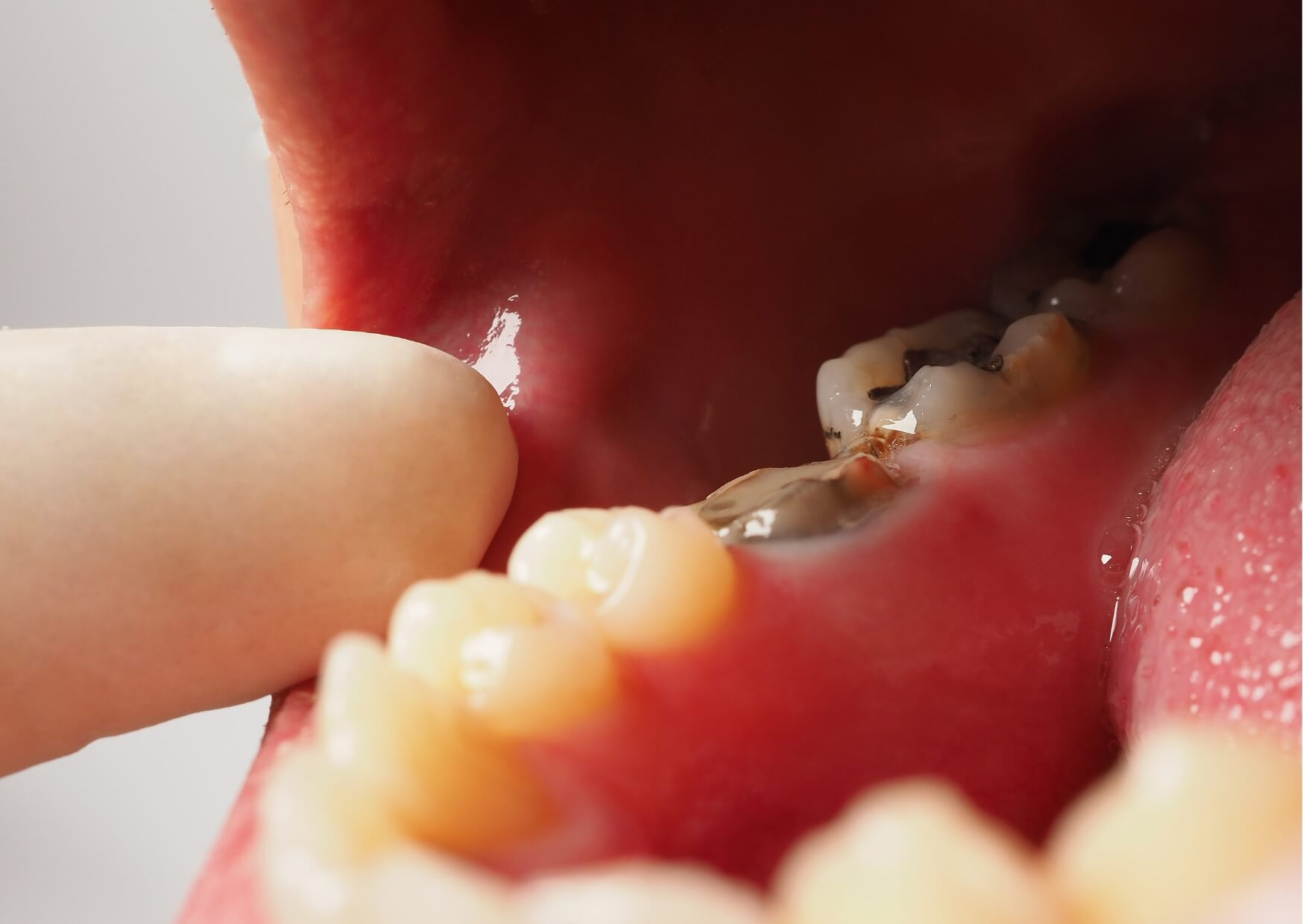
Tooth decay can look different depending on how early or advanced it is. Early on, it may show up as chalky white spots near the gumline or in the grooves of the chewing surface, where enamel is starting to lose minerals.
As decay gets worse, those areas may turn yellow, brown, or black. A cavity may look like a dark pit, a small hole, a rough spot, or a part of the tooth that looks chipped or sunken in.
Not every stain is decay, and not every cavity is easy to see. Some decay forms between teeth or under old fillings, where it may cause symptoms before you can see it in the mirror.
At New Wave Dental, our general dentistry team in Raleigh, NC, provides the kind of exam and conservative care that helps identify early tooth decay.
Early tooth decay usually begins when plaque stays on the tooth long enough for bacteria to produce acid. That acid pulls minerals out of enamel, which is the hard outer layer of the tooth.
At this stage, there may not be a hole yet. Instead, the surface may look dull, opaque, or less shiny than the surrounding enamel.
A common early sign is a white spot lesion. This means the enamel has started to weaken, and these spots are often easier to see after the tooth is dried during a dental exam.
Early changes often appear near the gumline, around orthodontic brackets, or in the deep grooves of molars. This is one reason regular exams matter, because the first stage of decay can often be treated before drilling is needed through routine care with general dentistry.
When decay breaks through the enamel, the tooth may develop a visible pit or hole. The area can look brown, gray, or black, but color alone does not show how deep the damage goes.
Some cavities look like a tiny dark dot in a groove. Others look like a larger crater, a rough-edged opening, or a place where food keeps getting stuck.
As decay reaches the inner layer of the tooth, the structure can weaken enough to chip or crumble. A tooth that suddenly looks broken without a clear injury may be a cracked tooth or may have underlying decay that hollowed it out from the inside.
Decay can also form around the edges of crowns, fillings, or other dental work. In those cases, the edge may look dark, uneven, or stained, though only an exam and X-rays can confirm whether the restoration is leaking or the tooth is decayed.
Tooth decay often shows up in predictable places. These are the areas where plaque tends to stay longer and brushing or flossing may miss.
Some cavities cause no pain at all, especially early on. Others may lead to sensitivity to cold or sweets, food trapping, bad breath, or a toothache that comes and goes.
As decay gets deeper, pain may become more frequent or more intense. Pain when biting, lingering sensitivity, or swelling can suggest the nerve or nearby tissues are becoming involved.
A visible dark area does not always tell the full story. Some painful teeth show very little visible change, while some large-looking cavities cause few symptoms.
That is why symptoms and appearance do not always match. Dentists usually combine a visual exam, X-rays, and a careful evaluation of the tooth to judge how active and how deep the decay may be.
Several common issues can look like a cavity. Surface stains from coffee, tea, tobacco, or dark foods may make grooves look dark without the tooth being soft or damaged.
Tartar, also called calculus, is hardened plaque that can appear yellow or brown near the gumline. It is not the same as decay, but it can make the area harder to clean and raise the risk of gum problems.
Enamel defects, worn spots, and old restorations can also look suspicious. In some cases, discoloration comes from past trauma or normal tooth development rather than active decay.
This is where a professional exam matters most. Not every dark spot is a cavity, and not every cavity looks dark.
Dentists do not diagnose tooth decay by color alone. The exam usually includes a close visual inspection, evaluation of the tooth surface, and X-rays when needed.
Dental X-rays are especially helpful for finding decay between teeth, under restorations, or in areas that look normal from the outside. A cavity can be larger below the surface than it appears in the mirror.
In many offices, lighting, magnification, and photos help track changes over time. This matters because some early areas can be monitored or treated conservatively, while others need a filling before the tooth weakens further.
If a spot has been there for a while, is getting darker, or is causing symptoms, it is worth having it checked instead of guessing. A prompt dental exam can help tell whether the change is stain, wear, early demineralization, or a cavity that needs treatment.

Treatment depends on how far the decay has progressed. Very early enamel changes may sometimes be managed with remineralization strategies, which help the tooth regain minerals and become more resistant to acid.
Once a true cavity forms, the damaged part of the tooth usually needs to be removed and restored. That often means a filling, though larger areas may require a crown if much of the tooth has been lost.
If decay reaches the pulp, which is the soft inner tissue that contains nerves and blood vessels, treatment may become more involved. In that situation, root canal treatment or removal of the tooth may be discussed depending on the condition of the tooth.
In cases where removal is the best option, a tooth extraction may be recommended. The key point is timing, because small areas are usually simpler and less costly to treat than deeper decay left alone.
The best prevention focuses on reducing plaque, lowering frequent sugar exposure, and strengthening enamel. Daily brushing with fluoride toothpaste and cleaning between the teeth are the basics, but consistency matters most.
Frequent sipping of sweet drinks, dry mouth, and constant snacking can all raise cavity risk. So can orthodontic appliances, exposed roots, and a history of repeated dental work.
Regular dental visits help catch changes before they become obvious. Many people do not notice decay until there is pain, a visible hole, or a broken tooth, and by then treatment is often more involved.
If you think a tooth looks suspicious, a prompt dental exam is the safest next step. An office can tell you whether it is stain, wear, early demineralization, or a cavity that needs treatment.
Book a dental visit if you notice a new dark spot, a hole, a rough area, food trapping, or a tooth that has become sensitive without a clear reason. It is also worth scheduling an exam if a filling or crown looks different at the edge.
Seek faster evaluation if there is swelling, severe tooth pain, fever, or facial pressure. These can be signs of a more serious infection and should not be ignored, and may require prompt emergency care.
For general guidance on urgent warning signs, Cleveland Clinic explains when dental emergencies need prompt attention. A tooth that is cracked, breaking apart, or painful when biting also deserves timely care.
Even when the cause turns out not to be decay, those symptoms usually need a professional diagnosis. The good news is that many decay problems are straightforward when caught early.
If you are unsure what you are seeing, getting it checked is usually the most practical way to protect the tooth and avoid a bigger problem later.
If you're concerned about a suspicious spot, New Wave Dental's general dentistry team in Raleigh also serves patients from Cary and Apex, and you can call (919) 241-5462 to schedule an appointment.
Yes. Early decay often appears as a chalky white area before it turns brown or black. That white appearance reflects mineral loss from enamel.
No. Brown spots can be caused by stain, tartar, old dental materials, or normal tooth grooves. A dentist may need to examine the area and take X-rays to tell the difference.
Yes. Decay between teeth or under a filling may not be visible at home. Sensitivity or food trapping may be the first clue, but some cavities cause no symptoms at all.
It may look like a small dark pit, a rough opening, or a part of the tooth that seems chipped or sunken in. The size you can see on the surface does not always show how deep it goes.
Decay becomes more urgent when there is swelling, severe pain, fever, pus, or spreading facial pressure. Those signs can suggest infection and should be evaluated promptly.