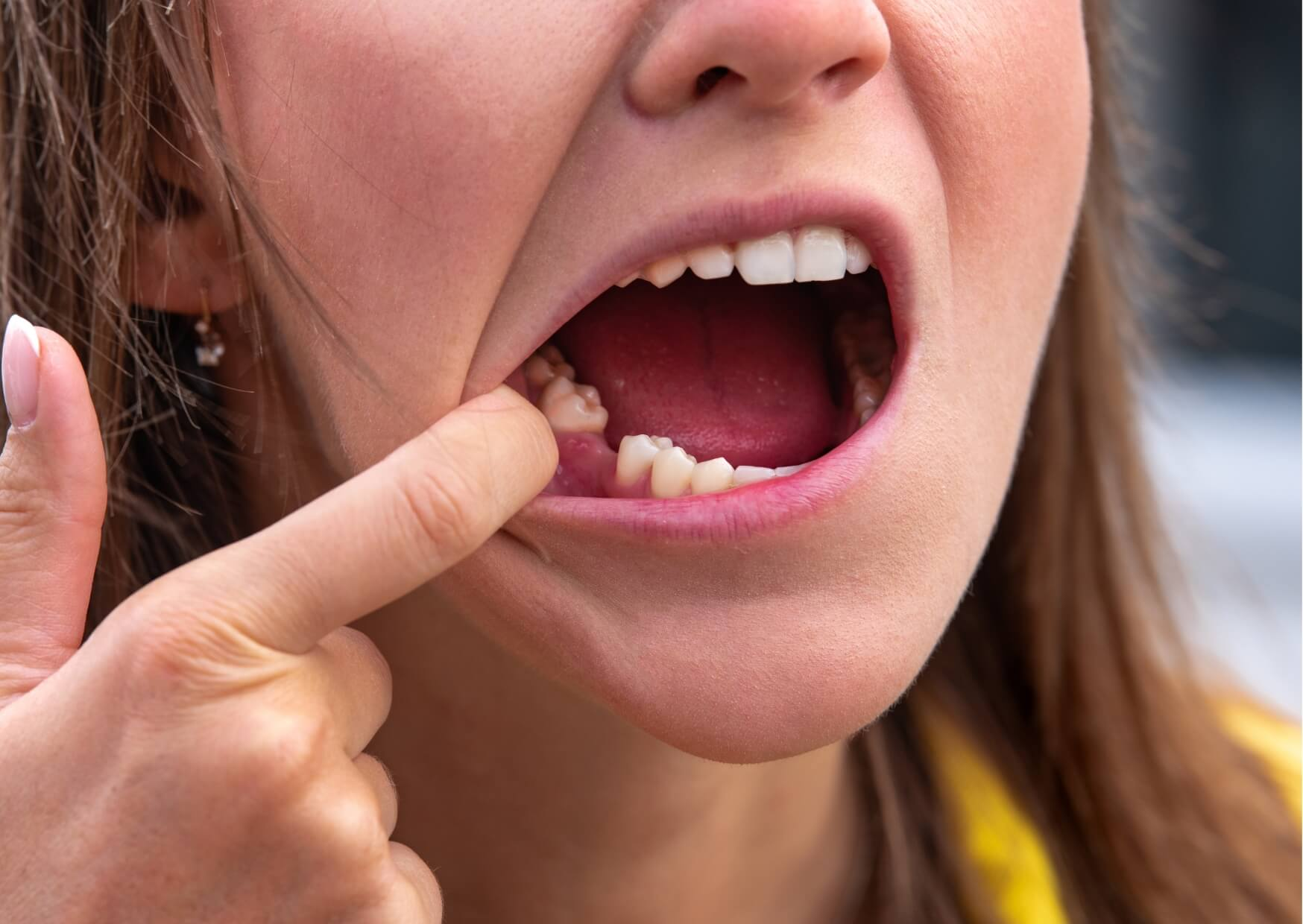
A missing tooth can change an ordinary day very quickly. Eating feels different, speech may sound off, and a simple question can suddenly feel urgent: will the tooth grow back?
The short answer is simple. If a baby tooth falls out, an adult tooth often grows beneath it, but that process takes time. If an adult tooth is lost, it does not grow back naturally.
That is the key distinction behind the question, how long does it take for a tooth to grow back. The answer depends on whether the mouth is going through normal childhood development or whether a permanent tooth has been lost because of injury, decay, gum disease, or another problem.
Even when a replacement tooth is expected, the timeline is not exact. Eruption is the process of a tooth moving through the gums into the mouth, and it can vary by months from one person to another.
At New Wave Dental, our emergency care team in Raleigh, NC provides the kind of urgent, compassionate care this topic often brings to mind.
For many families, losing a tooth comes in two parts. First there is the visible gap, then there is the waiting.
Usually, people want to know whether the missing tooth is part of a normal transition or the start of a permanent change. That matters more than the exact number of days.
If the lost tooth was a baby tooth, the permanent tooth may already be developing under the gums. If the lost tooth was permanent, the body will not grow another one on its own.
For many children, losing a baby tooth is expected. There is excitement, a new gap in the smile, and a lot of mirror-checking.
In many cases, the permanent tooth starts to appear within a few weeks to a few months after the baby tooth comes out. Some teeth take longer, especially if the adult tooth is still deep in the bone or coming in at an angle.
A baby tooth can also fall out before the adult tooth is ready. This may happen after trauma, extensive decay, or early loosening. When that happens, the space may stay open for a while before the permanent tooth appears.
The first permanent teeth often begin to erupt around age 6. Front teeth usually come in first, while canines and premolars often come later, and second molars commonly erupt around ages 11 to 13. The ADA’s eruption charts can help families understand the usual sequence and age ranges.
That context matters. A missing front tooth at age 7 may be completely normal, while the same gap at a very different age may need a closer look.
A permanent tooth may erupt slowly because of crowding, limited space, extra gum tissue, or an unusual eruption path. In some cases, the tooth may be impacted, which means it is blocked and cannot come in normally.
Less often, the permanent tooth may be missing entirely. This is called congenital absence, meaning the tooth never formed. A dentist can usually sort this out with an exam and dental imaging if a tooth seems late. If your family needs a routine exam or guidance, our family dentistry services can help determine the next step.
This is the part many people do not expect. Once a permanent tooth is gone, the body does not make another natural replacement.
A tooth may be lost in one sudden moment, such as a fall, sports injury, or biting something hard. Or it may be the result of a slower problem, such as deep decay, infection, or advanced gum disease.
Either way, adult teeth do not grow back. If replacement is needed, the usual options are a dental implant, a bridge, or a partial denture, depending on the location of the tooth, the health of the gums and bone, and the overall treatment plan. Many patients choose dental implants when a long-term, natural-feeling replacement is the goal.
A knocked-out permanent tooth is a true dental emergency and needs prompt emergency care. In some cases, a dentist may be able to place the natural tooth back into the socket if care happens quickly.
The chance of saving the tooth depends on timing, how the tooth was handled, and the condition of the root and surrounding tissues. International avulsion guidelines reinforce how important immediate care can be in these situations.
Sometimes the mouth gives clues before a tooth appears. A small bulge in the gums, tenderness in the area, or a visible white edge under the tissue may suggest that eruption is underway.
Still, appearance alone is not enough when a tooth seems significantly delayed. A dentist may compare the timing with normal eruption patterns, check whether there is enough space, and use X-rays to see the position of the developing tooth.
This helps answer the real questions. Is the tooth present, blocked, missing, or simply taking longer than expected?
That evaluation matters because delayed eruptions can have different causes. Some are harmless and just need time, while others may affect alignment, bite development, or nearby teeth if left untreated.
A short waiting period is often reasonable after a baby tooth falls out, especially if the timing fits the child’s age and the area looks healthy. Families often notice gradual changes before the new tooth breaks through.
But waiting too long can make a simple problem harder to manage. If a tooth has been missing for months with no sign of eruption, if the gums look swollen or unusual, or if nearby teeth are drifting into the space, a dental evaluation is a smart next step.
Persistent delay, pain, swelling, or facial asymmetry should not be ignored. These signs do not always mean something serious, but they do deserve a professional exam.
For adults, the guidance is more direct. If a permanent tooth is lost, replacement planning should happen sooner rather than later because neighboring teeth can shift and the bone in that area may gradually shrink over time.
A gap in the mouth is not always just cosmetic. Teeth help hold each other in position, and when one is missing, the balance can change.
In children, losing a baby tooth too early may affect how the permanent tooth comes in. In adults, a missing permanent tooth may lead to drifting, bite changes, food trapping, and added stress on nearby teeth.
Bone loss is another concern after a permanent tooth is removed or lost. The jawbone in that area is normally supported by the tooth root, and without that stimulation, the bone may slowly decrease in volume. Information on post-extraction bone loss helps explain why timely replacement is often recommended.
That is why the question how long does it take for a tooth to grow back often leads to a second question. If it will not grow back, what is the safest and most durable way to restore the space?

If a permanent tooth is missing, treatment depends on age, location, oral health, and long-term goals. The best option is not always the fastest one.
A dental implant replaces the root and the visible tooth with separate parts designed to function like a natural tooth. A bridge uses neighboring teeth for support, while a partial denture is a removable option that can replace one or more missing teeth.
For children and teens, treatment planning is often more cautious because the jaws are still developing. In that setting, a dentist may focus first on preserving space, guiding eruption, or coordinating care with an orthodontist if needed.
The right plan should come from an exam, imaging, and a discussion of risks, benefits, timing, and cost. General information can help you ask better questions, but it cannot replace personalized dental advice.
Some situations should move quickly. A knocked-out permanent tooth, uncontrolled bleeding, significant facial swelling, fever with dental pain, or trouble swallowing or breathing all need urgent attention.
Severe pain after trauma, a tooth that looks pushed out of position, or swelling that spreads into the face or jaw also deserves prompt care. In children, a missing tooth after an injury may need evaluation even if the area seems calm at first.
If the situation feels uncertain, it is safer to call a dentist than to guess. Dental problems are often easier to treat early, before infection, space loss, or bite problems become more complicated.
Sometimes the hardest part is not the treatment. It is the pause before making the call, when a family hopes the mouth will quietly fix itself. Sometimes it does, especially when a child is simply waiting on a permanent tooth. Sometimes it does not, and that is exactly when a timely dental visit can protect comfort, appearance, and long-term oral health.
New Wave Dental in Raleigh, NC offers emergency care for urgent dental problems and serves patients from Cary and Apex as well; call (919) 241-5462 to schedule.
If it is a baby tooth, the permanent tooth may come in within weeks to months, depending on age and tooth position. If it is a permanent tooth, it will not grow back naturally.
No. Humans do not naturally regrow lost permanent teeth.
A dentist can examine the area and usually use X-rays to see whether the tooth is developing, delayed, blocked, or absent. This is the most reliable way to answer that question.
Not always. Some delay can be normal, but if several months pass with no sign of eruption, or if there is pain, swelling, or crowding, schedule a dental evaluation.
Seek emergency dental care right away. Time matters, and in some cases the natural tooth may be able to be placed back if treatment happens quickly.